Sump pump discharge rules in Grand Rapids: where can you drain water?
Grand Rapids requires sump pumps to discharge outside the sanitary sewer. Here is where you can legally drain water, what the code says, and how to avoid fines.
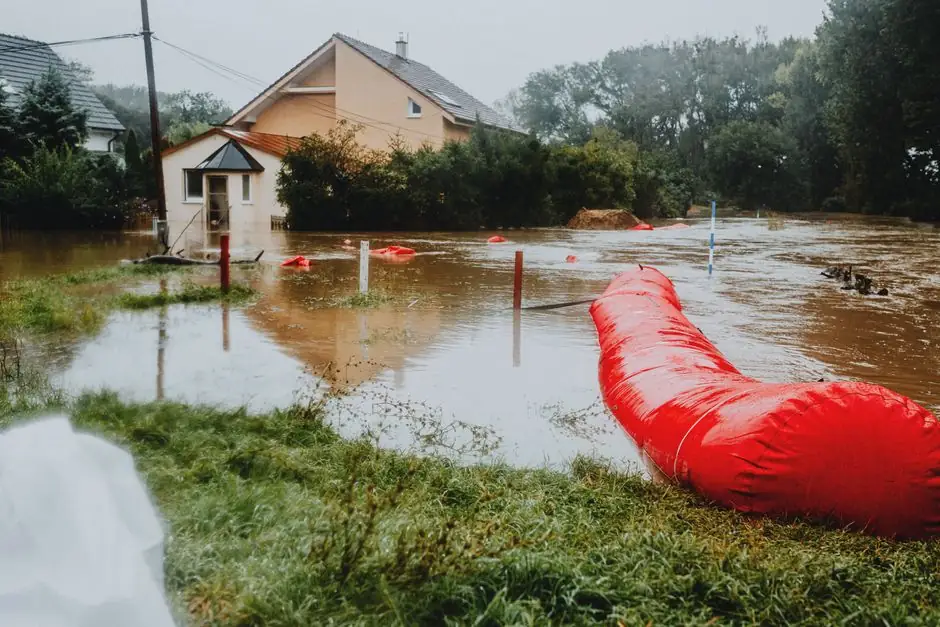
In Grand Rapids, sump pump discharge must go outside the building - never into the sanitary sewer, a floor drain, or a basement sink. The city requires it to be piped to a point on your own property where it can drain away from the foundation, and it has to stay on your lot. That is the rule in one sentence. The rest of this post covers the exact code language, the spots that are legal, the spots that will get you a notice, and how we handle discharge line problems for homeowners across Grand Rapids.
The short answer: where you can legally drain sump water in Grand Rapids
Sump pump discharge rules in Grand Rapids are enforced by the City of Grand Rapids and are built around one idea: storm and groundwater do not belong in the sanitary sewer system. The city's sewer ordinance prohibits sump pumps, roof drains, and foundation drains from connecting to the sanitary sewer. That means the pipe leaving your pump has to terminate above ground or in a dedicated storm drainage path on your property.
Legal discharge points in Grand Rapids include:
- Your lawn or landscaped area, at least 10 feet from the foundation and sloping away from the house.
- A dry well or French drain sized for your pump's flow rate.
- A curb drain or storm sewer inlet, but only where the city has approved a direct connection.
- A rain garden or bioswale designed to handle the volume.
Illegal discharge points include the sanitary sewer, any floor drain tied to the sewer, a basement slop sink, and the sanitary lateral itself. If your pump is currently tied into the sewer line, you are out of compliance and you are one inspection away from a notice.
What the Grand Rapids sump pump discharge code actually requires
Sump pump discharge code in Grand Rapids falls under the city's sewer use ordinance and the Michigan Plumbing Code, and both point to the same outcome: separated storm and sanitary systems. The city has spent decades separating combined sewers, and sump pumps piped into the sanitary line undo that work. Every gallon your pump sends to the sanitary sewer is a gallon the treatment plant has to process.
The practical requirements we see enforced most often:
- No sanitary sewer connection. The discharge pipe cannot tie into any drain that leads to the sanitary sewer.
- Discharge must stay on your property. Water cannot cross the property line onto a neighbor's lot.
- Discharge must not create a nuisance. If it floods a sidewalk, freezes into a sheet of ice, or erodes a slope, it is a problem.
- Discharge must be directed away from the foundation. Ten feet is the number we work with on most Grand Rapids lots.
If you are not sure whether your current setup passes, a Sump Pump Inspection Grand Rapids MI will tell you in about 30 minutes. We check the discharge point, the check valve, the pit, and the float, and we tell you exactly what needs to change.
Can I drain my sump pump into the street in Grand Rapids, MI?
Draining sump pump water into the street is allowed in some Grand Rapids neighborhoods and prohibited in others, and the difference usually comes down to whether the street has a storm sewer inlet nearby and whether the city has approved that discharge path. The short version: do not assume it is fine. Water that runs down the curb can freeze in winter, and Grand Rapids sees plenty of that.
What we see in practice:
- Streets with curb inlets and a separated storm system are more likely to accept a directed discharge.
- Streets without storm inlets push the water to a low spot, a neighbor's driveway, or the end of the block.
- Any discharge that creates ice on a public sidewalk is a liability issue, not just a code issue.
If your pump runs every few minutes during a spring thaw, the street is the wrong answer anyway. That volume belongs in a dry well or a rain garden, not on the pavement.
Where to drain sump pump water on your own property
Where to drain sump pump water in Grand Rapids MI almost always comes down to your lot's slope, soil, and how much water your pump moves. A pump that cycles 10 times an hour during a wet week is moving serious volume, and a shallow splash block will not handle it.
Options that work on Grand Rapids lots:
- Pop-up emitter. A buried line ends in a pop-up head that opens when the pump runs. Cheap, tidy, and easy to mow around.
- Dry well. A gravel-filled pit, typically 3 to 4 feet deep and lined with landscape fabric, that lets water soak into the soil. Works well in sandy areas; struggles in heavy clay.
- French drain. A perforated pipe in a gravel trench that carries water to a daylight outlet downhill.
- Rain garden. A planted depression that holds and filters the water. Good for shallow slopes and small volumes.
On the city's west side and in older neighborhoods like Sump Pump Repair in Heritage Hill, we run into clay soil and tight lots constantly. A dry well that would work in Cascade can back up in a Heritage Hill side yard, so we size the discharge based on the actual soil and the pump's gallons-per-hour rating.
Discharge rules for Kent County and the surrounding townships
Sump pump discharge regulations Kent County Grand Rapids homeowners should know about follow the same core principle as the city: keep groundwater out of the sanitary sewer. The Kent County Health Department and the Michigan Department of Environment, Great Lakes, and Energy (EGLE) both back the separation requirement, and individual townships add their own rules on top.
A few local differences worth knowing:
- Grand Rapids city. Strict separation; discharge must stay on the property and away from the foundation.
- East Grand Rapids. Similar separation rules, with extra attention to discharge that reaches Reeds Lake or its tributaries.
- Wyoming, Kentwood, and Walker. Enforce separation and require discharge to be directed to a storm-approved path or on-site infiltration.
- Outlying townships. More reliance on septic and private drainage, so on-site infiltration is usually the expectation.
If you are in a neighborhood like Sump Pump Repair in Eastown where the housing stock runs from the 1920s through the 1950s, the original discharge plumbing was often tied into whatever drain was closest. That is the setup the city is trying to eliminate, and it is the first thing we check on an inspection.
Common mistakes that get Grand Rapids homeowners fined
The mistakes we see most often are not exotic. They are the same four or five problems, repeated across the city every spring.
- Piping the pump into the sanitary sewer. This is the big one. It is a direct code violation and the city can require you to fix it at your cost.
- Discharging onto a sidewalk or driveway. In January and February, that is an ice rink. It is also a liability if someone slips.
- Letting the discharge line freeze. A line that runs flat or uphill holds water, and standing water freezes. Once the line is blocked, the pump runs and the basement floods.
- Discharging onto a neighbor's property. Even if the water is clean, you cannot send it across the property line.
- Using a short splash block on a high-volume pump. The water comes right back to the foundation, and you are pumping the same gallon twice.
If your discharge line is frozen, cracked, or running the wrong direction, a Sump Pump Discharge Line Repair Grand Rapids MI is usually a same-day fix. We thaw the line, re-pitch it, and confirm the water is leaving the property before we pack up.
When to call a professional for discharge line problems
Call a professional when the discharge line freezes more than once a season, when water pools near the foundation after the pump runs, or when you cannot tell where the pipe actually terminates. Those three symptoms cover most of the discharge calls we run in Grand Rapids.
We handle the whole job: locate the existing line, check the check valve and float, correct the pitch, and route the discharge to a legal point on your property. If the pump itself is on its way out, we will tell you - a pump that runs constantly and still leaves water in the pit is usually a worn impeller or a failing float switch, not a discharge problem.
We also see plenty of homeowners who inherited a bad setup when they bought the house. If that is you, start with a Sump Pump Maintenance Grand Rapids MI visit. We clean the pit, test the pump, check the discharge, and give you a straight answer on what needs to change.
Frequently Asked Questions
What are the sump pump discharge rules in Grand Rapids MI?
Discharge must go outside the building, stay on your own property, and never enter the sanitary sewer. It must be directed at least 10 feet from the foundation and must not create ice or flooding on sidewalks or neighboring lots. The City of Grand Rapids enforces this under its sewer use ordinance.
Where can I legally drain my sump pump in Grand Rapids?
Legal options include your lawn or landscaped area, a dry well, a French drain, a rain garden, or an approved storm sewer connection. The discharge point has to be on your property and sloped away from the house. Anything tied to the sanitary sewer is illegal.
Can I discharge sump pump water into the sewer in Grand Rapids Michigan?
No. Connecting a sump pump to the sanitary sewer is prohibited in Grand Rapids and across Kent County. The city has separated its storm and sanitary systems specifically to keep groundwater out of the treatment plant, and a sewer connection can trigger a notice and a required fix at your expense.
Who enforces sump pump discharge rules in Grand Rapids MI?
The City of Grand Rapids enforces discharge rules through its sewer use ordinance, typically during plumbing inspections, home sales, or complaint investigations. Kent County and EGLE back the separation requirement, and individual townships add their own rules on top of the city's.
How much does it cost to fix a sump pump discharge problem in Grand Rapids?
Typical 2026 pricing in this area runs $150 to $450 for a discharge line repair, re-pitch, or new pop-up emitter, and $800 to $2,500 for a dry well or French drain sized for a high-volume pump. Frozen line thawing is usually at the low end of that range.
Get help with Sump Pump Repair in Grand Rapids
If your discharge line is frozen, tied into the sewer, or dumping water where it should not, we can fix it. We handle discharge line repair, pump replacement, and full Sump Pump Repair Grand Rapids MI across the city and the surrounding townships.
Call The Sump Pump Experts at +16166168292 and we will get your pump discharging legally and your basement dry.